Alcohol and Driving: Sanctions and Legal Consequences
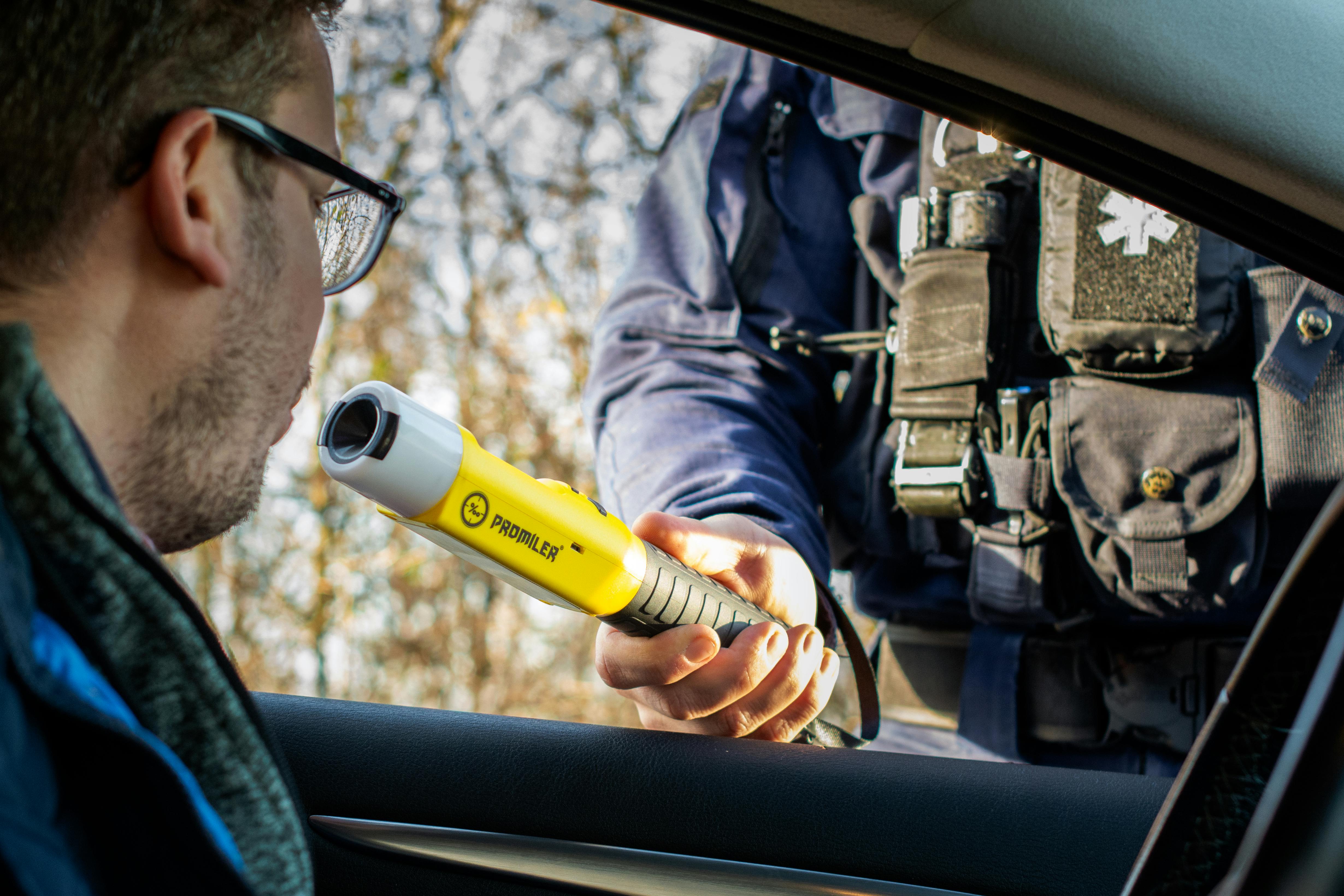
Since the moment we obtain our driver's license, we hear the same warning: “if you drink, don't drive”. However, many drivers are unaware of how breathalyzer tests actually work, how many tests are performed, and what legal and criminal consequences driving under the influence of alcohol can have.
A dinner, a celebration, or a simple after-meal conversation can end in a breathalyzer citation, even when the driver believes they are in a fit condition to drive. In these cases, the law is not based on sensations, but on objective results.
How many breathalyzer tests are performed at a checkpoint?
In a breathalyzer checkpoint, the legal procedure establishes three mandatory tests, and a fourth optional test if the driver does not agree with the result.
First test: screening breathalyzer
The first breathalyzer test is performed with a screening device. Its function is merely indicative.
If the result is below 0.25 mg/l in exhaled air, the driver may continue on their way.
If the result is positive, the procedure continues.
Second test: contrast screening breathalyzer
After at least 10 minutes have elapsed, the officer must perform a second test, also with a screening breathalyzer. This test serves as a contrast to the first one.
Third test: evidential breathalyzer
If the result remains positive, a third test is performed with an evidential breathalyzer, which is a high-precision electronic device and the only one with full probative value in criminal and administrative proceedings.
👉 This third test is mandatory and is the one taken into account for legal purposes.
Fourth test: blood or urine analysis
If the driver does not agree with the result of the evidential breathalyzer, they have the right to request a fourth test, consisting of a blood or urine analysis at a health center.
This test is voluntary.
If the result is positive, the cost of the analysis shall be borne by the driver.
If it is negative, it may invalidate the previous result.
Is it mandatory to undergo breathalyzer tests?
Yes. The driver is legally obligated to undergo the three breathalyzer tests when requested by an officer of the law.
Refusing to perform any of these tests constitutes a crime against road safety, regardless of the actual blood alcohol level.
Crime for refusing a breathalyzer test
Article 383 of the Criminal Code
“A driver who, when requested by an officer of the law, refuses to undergo the legally established tests to check alcohol levels and the presence of toxic drugs, narcotics, and psychotropic substances shall be punished with a prison sentence of six months to one year and deprivation of the right to drive motor vehicles and mopeds for one to four years.”
Article 383 of the Criminal Code establishes the penalties for refusal to take a breathalyzer test:
Imprisonment from 6 months to 1 year
License revocation from 1 to 4 years
👉 In practice, refusal carries more severe criminal consequences than the DUI offense itself.
DUI Offense: Article 379 of the Criminal Code
The offense of driving under the influence of alcohol occurs when:
A level of 0.60 mg/l in exhaled air is exceeded, or
The influence of alcohol on driving is proven
The prescribed penalties are:
Imprisonment from 3 to 6 months, or
A fine from 6 to 12 months, or
Community service from 31 to 90 days
And in all cases:
Deprivation of the right to drive from 1 to 4 years
Administrative fine for alcohol
When legal limits are exceeded but the criminal threshold is not reached, an administrative sanction is imposed.
Limits and sanctions
For general drivers:
Between 0.25 and 0.60 mg/l
Fine of €500 to €1,000
Loss of license points
Criminal procedure for DUI: speedy trial
If the level exceeds 0.60 mg/l, a criminal proceeding for DUI is initiated, which is usually processed via a speedy trial (juicio rápido).
The procedure begins with a police report and moves to the duty court, where:
The investigated person provides a statement
Necessary proceedings are carried out
All of this within a maximum period of 72 hours
The driver must appear assisted by a criminal defense lawyer, either private or court-appointed.
Plea agreement and sentence reduction
The accused may:
Enter a plea of guilty (conformidad), admitting the facts, which entails a one-third reduction of the sentence
Or formulate a defense and continue the proceedings
In most cases, the plea agreement is chosen, as it allows for serving only two-thirds of the requested sentence.
Widmark Curve: how alcohol acts in the body
The Widmark curve explains the evolution of alcohol in the body and is divided into three phases:
Absorption: alcohol passes quickly into the blood (30–40 minutes).
Peak level: between 30 and 90 minutes after the last intake.
Elimination: the body eliminates alcohol at a rate of approximately 0.15 mg/l per hour.
This explains why a driver may test at a criminal level after they have stopped driving, which opens the door to certain defense strategies, always analyzing the specific case.
Conclusion: the only safe limit is 0.0
From a legal and road safety point of view, there is no room for doubt:
The only safe alcohol level for driving is 0.0.
If you have been cited for a DUI or are facing criminal proceedings, it is essential to have a lawyer specialized in crimes against road safety.